The Adventures of Sherlock Holmes
Arthur Conan Doyle
Mystery and adventureFree

FreePublic domain
Public domain classic. Add to your desk or start reading now.
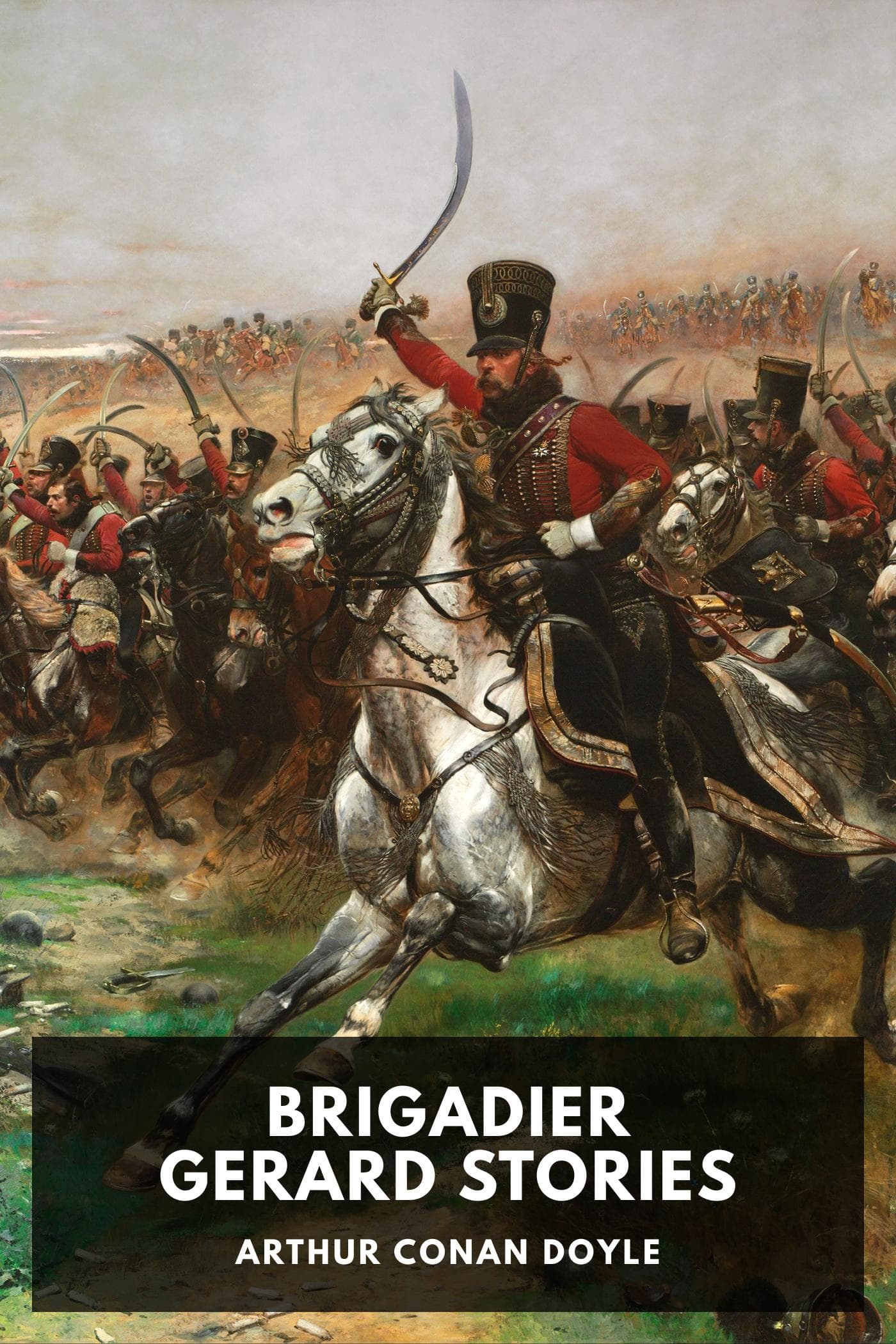
When Arthur Conan Doyle’s gallant French cavalryman Brigadier Gerard first appeared in print, the reading public was still reeling from the “death” of Conan Doyle’s most famous creation, Sherlock Holmes, the previous year. What they found in Brigadier Gerard was someone very different from the intense, emotionless consulting detective: a courageous and skilled, but vain and emotional, soldier-adventurer in search of glory for himself and for France, devoted to his elderly mother and the Emperor Napoleon in the extreme, and witness to some of the greatest events in European history as he fought the men and wooed the women of countless countries during the Napoleonic Wars. The Gerard of these stories is aged and retired, but vividly recounts the grand adventures of his youth, weaving romance and adventure, conflict and cunning, and world-changing events of military and political history with the human drama of those caught up in a turbulent era of war. His tales are thrilling ones in which he—of course—plays the leading role. In writing the Brigadier’s tales of his adventures, Conan Doyle brought to bear his own knowledge of Napoleonic history, informed by the insights on warfare he gained in South Africa during the Boer War. His interest in sport is displayed in the tales which touch upon boxing, fox-hunting, and cricket. His keen eye as a social observer is evident in a number of stories where the Brigadier’s misperceptions of English society, prejudices from his own French viewpoint, and errors from his limited perspective of some events, highlight the idiosyncrasies of English life in both the upper and lower classes during the late Georgian and Regency eras. In the dozen and a half stories collected here, readers will experience the Napoleonic Era from a perspective very unlike that of War and Peace or other Napoleonic memoirs, histories, or works of fiction.
The Duke of Tarentum, or McDonald, as his old comrades prefer to call him, was, as I could perceive, in the vilest of tempers. His grim Scotch face was like one of those grotesque doorknockers which one sees in the Faubourg St. Germain. We heard afterwards that the Emperor had said in jest that he would have sent him against Wellington in the South, but that he was afraid to trust him within the sound of the pipes. Major Charpentier and I could plainly see that he was smouldering with anger.
“Brigadier Gerard of the Hussars,” said he, with the air of the corporal with the recruit.
“Major Charpentier of the Horse Grenadiers.”
Without more ado he flung open the door and announced us.
I have seen Napoleon ten times on horseback to once on foot, and I think that he does wisely to show himself to the troops in this fashion, for he cuts a very good figure in the saddle. As we saw him now he was the shortest man out of six by a good hand’s breadth, and yet I am no very big man myself, though I ride quite heavy enough for a hussar. It is evident, too, that his body is too long for his legs. With his big, round head, his curved shoulders, and his clean-shaven face, he is more like a Professor at the Sorbonne than the first soldier in France. Every man to his taste, but it seems to me that, if I could clap a pair of fine light cavalry whiskers, like my own, on to him, it would do him no harm. He has a firm mouth, however, and his eyes are remarkable. I have seen them once turned on me in anger, and I had rather ride at a square on a spent horse than face them again. I am not a man who is easily daunted, either.